
SA Dental Care
Companion Animal Navigation
Routine Care
Companion Animal Dental Care
The importance of oral health for your pet
Dental care is an important part of your pets overall health. Just like humans, pets can develop plaque, tartar, and gum disease, which can lead to pain, infection, and other health problems if left untreated. Pets often hide dental discomfort. Even if your pet seems fine, underlying dental disease can still be present.
It is often the case that what we see on the surface is not the full extent of the problem. Plaque and tartar can extend below the gum line, at which point at home dental hygiene will not be enough.
A build up of tartar often results in the affected tooth becoming loose. This is due to destruction of the bone beneath the gum line. Removal of tartar may a
The benefits of dental care
The benefits of dental care are huge. Including pain reduction from gum disease and tooth decay and dental care also prevents infection that can affect the heart, kidneys and liver.
In older pets maintaining good dental health is especially important. Any reduction in food intake can impact the overall health of older pets. It is also important to keep in mind the increased risk of anaesthesia for older pets. Avoiding a dental by maintaining good dental health at home is the gold standard.
Procedure
We offer Professional dental cleaning, de-scaling, extractions and treatment for oral infections or masses.
All our dental procedures are performed under a full general anaesthetic. This is to ensure the safelty of your pet and the safety of our veterinary team.
Prevention and management
Preventing dental disease is easier than treating it. Regular tooth brushing, dental diets and routine veterinary dental check ups are key to maintaining a healthy mouth for your pet.
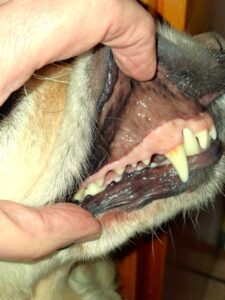
Signs of dental disease
You can monitor your pet at home for the following signs of dental disease. If you notice your pet exhibiting any of these signs call our team and we can arrange for a dental consultation.
- Bad breath
- An early sign of infection or plaque build up
- Exessive plaque
- slimy film that forms on teeth after eating
- Yellow or brown tartar
- plaque that has built up overtime and hardened
- Red and swollen gums (gingivitis)
- A sign of infection and irritation
- Difficulty eating or chewing
- may be seen as a preference for wet food, or dropping kibble from the mouth when trying to chew
- Behavioural changes
- such as irritability, mouth/head shyness, reduced activity